
Christ the Fulfillment of the Law: The Sacrifice That Removed Sin
Many people misunderstand the relationship between Jesus Christ and the Law of God. Some believe Christ abolished the Law entirely, while others fail to recognize the deeper spiritual purpose behind the sacrificial system established in the Old Testament. According to the NKJV Scriptures and the original Hebrew and Greek languages, Jesus did not come to destroy God’s Law, but to fulfill its prophetic and redemptive purpose through His perfect sacrifice on the cross. The animal sacrifices under the Old Covenant temporarily covered sin, but they could never permanently remove it. Christ became the final and complete atonement, accomplishing what the blood of bulls and goats could never achieve.
Jennifer
5/26/20262 min read
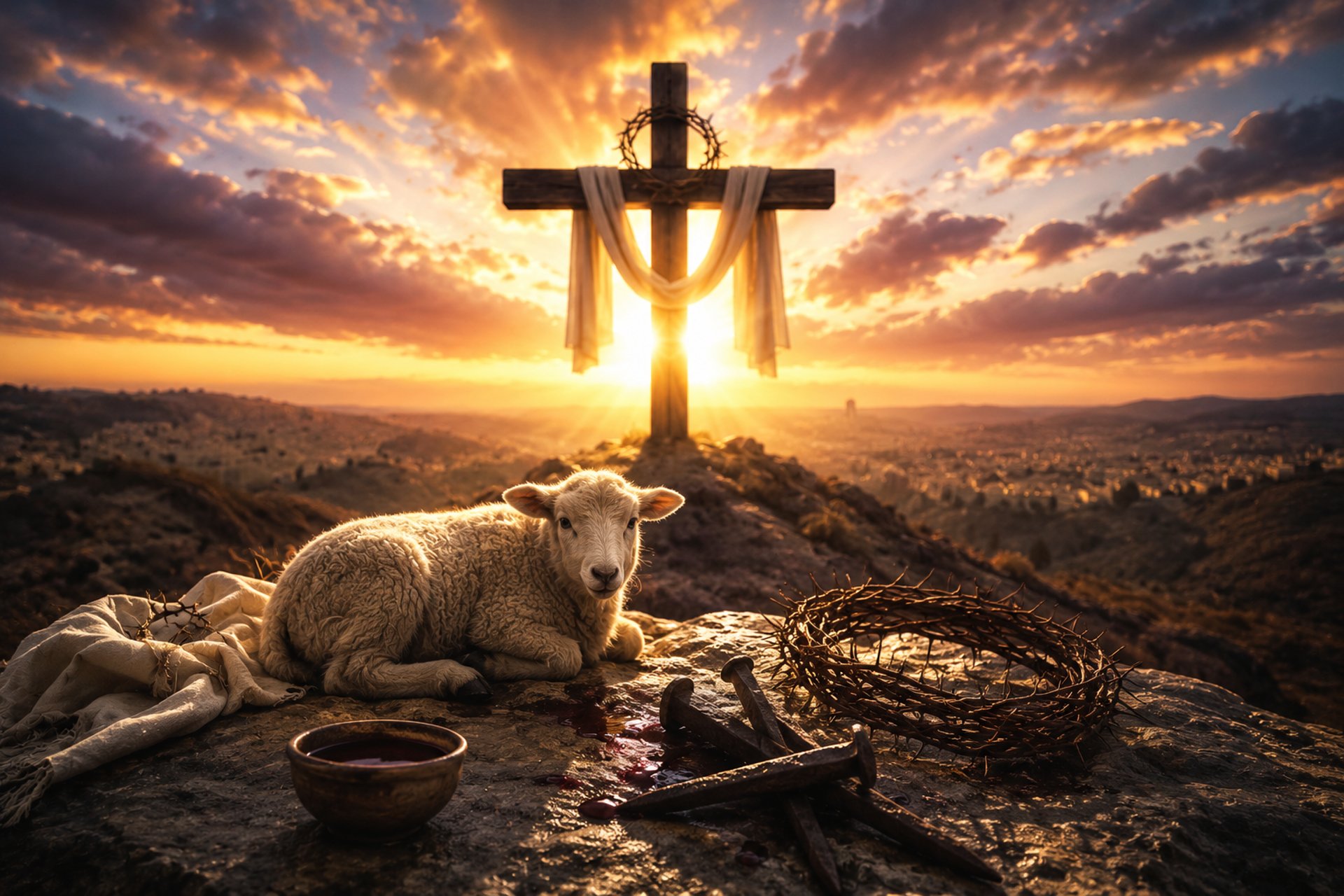
Christ Did Not Abolish the Law
Jesus clearly declared in Matthew 5:17 (NKJV):
“Do not think that I came to destroy the Law or the Prophets. I did not come to destroy but to fulfill.”
The Greek word for “fulfill” is πληρόω (plēroō), meaning:
to complete,
to bring to fullness,
to accomplish fully,
to bring into perfect realization.
Christ was not canceling God’s moral truth; He was bringing the Law to its complete prophetic purpose. The Law pointed toward Him from the beginning.
The sacrificial system given through Moses revealed humanity’s need for redemption. Every lamb sacrificed under the Old Covenant foreshadowed the coming Messiah.
The Old Testament Sacrifices Only Covered Sin
In the Old Testament, the Hebrew word commonly associated with atonement is כָּפַר (kāphar), meaning:
to cover,
to conceal,
to make temporary atonement.
Animal sacrifices provided ceremonial cleansing and temporary covering for sin, but they did not permanently remove guilt from the heart.
Hebrews 10:4 (NKJV) declares:
“For it is not possible that the blood of bulls and goats could take away sins.”
The sacrifices were prophetic shadows pointing toward the true Lamb of God.
This is why John the Baptist proclaimed in John 1:29 (NKJV):
“Behold! The Lamb of God who takes away the sin of the world!”
Unlike the temporary covering under kāphar, Christ’s sacrifice accomplished complete removal and reconciliation.
Jesus Became the Final Sacrifice
Under the Law, sacrifices had to be repeated continually because sin remained present. But Jesus offered Himself once and for all.
Hebrews 9:12 (NKJV) says:
“Not with the blood of goats and calves, but with His own blood He entered the Most Holy Place once for all, having obtained eternal redemption.”
The Greek phrase ἐφάπαξ (ephapax) means:
once for all time,
never needing repetition again.
Jesus fulfilled:
the Passover Lamb,
the sin offering,
the High Priesthood,
and the atonement itself.
The veil tearing in the temple at Christ’s death symbolized direct access to God through His sacrifice.
The Law Revealed Sin — Christ Brought Redemption
The Law itself was holy, righteous, and good (Romans 7:12). Its purpose was to reveal sin and humanity’s inability to save itself.
Galatians 3:24 (NKJV) teaches:
“Therefore the law was our tutor to bring us to Christ, that we might be justified by faith.”
The Greek word for “tutor” is παιδαγωγός (paidagōgos) — a guardian or guide leading someone to maturity. The Law guided mankind toward the realization that only the Messiah could truly redeem humanity.
Christ fulfilled the sacrificial requirements because He alone lived without sin. He became:
the spotless Lamb,
the perfect High Priest,
and the eternal sacrifice.
Spiritual Reflection
Jesus did not erase God’s holiness; He satisfied its righteous requirement through perfect obedience and sacrificial love. The Old Covenant sacrifices revealed humanity’s continual struggle with sin, while Christ’s sacrifice revealed God’s complete solution for sin.
The cross was not the destruction of the Law — it was the fulfillment of everything the Law pointed toward from the beginning.
Through Christ:
sin is no longer merely covered,
it is forgiven,
cleansed,
and defeated through His blood.
Deep Spiritual Questions
If the animal sacrifices could only temporarily cover sin, what does Christ’s final sacrifice reveal about the seriousness of sin before a holy God?
How does understanding the Hebrew concept of kāphar (“covering”) deepen your appreciation for Christ permanently removing sin through His blood?
In what ways does modern Christianity sometimes misunderstand the difference between abolishing the Law and fulfilling it?
If Jesus fulfilled the sacrificial system completely, how should believers today spiritually respond in obedience, worship, and repentance?
Closing Scripture
Hebrews 10:10 (NKJV):
“By that will we have been sanctified through the offering of the body of Jesus Christ once for all.”
Bloodfallen's CB Corner
Bloodfallenscbcorner@gmail.com
© 2025. All rights reserved.


John 3:16 NKJV "For God so loved the world that He gave His only begotten Son, that whoever believes in Him should not perish but have everlasting life".
601-402-4128
Hattiesburg, MS 39402