
No Interference: Tuning Your Heart to True Worship
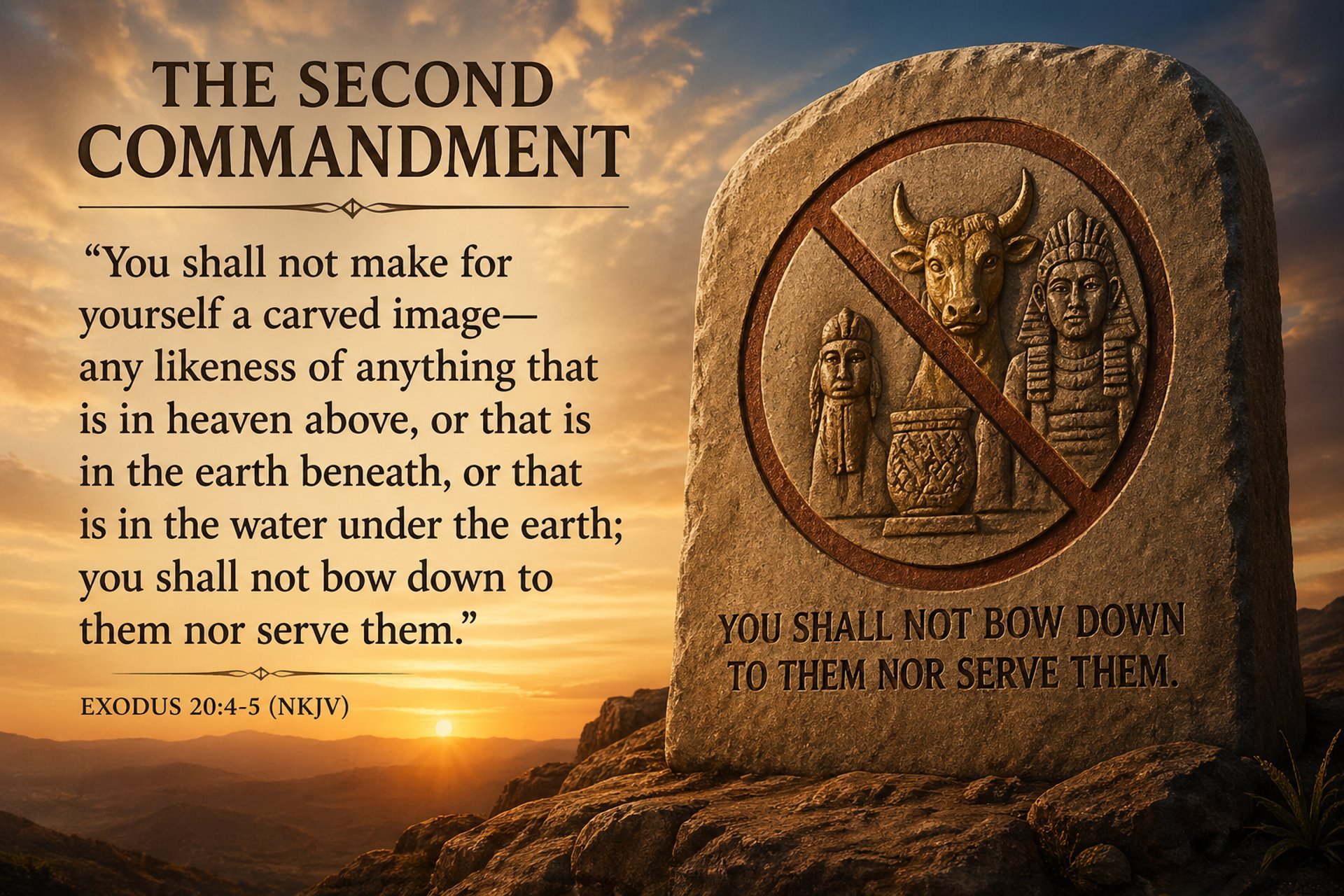
You shall not make for yourself any idol. For the Lord our God is a jealous God. At Bloodfallen’s CB Corner, we serve with hands, but worship with our whole heart belongs to Him alone.
STUDYING THE TEN COMMANDMENTS
Jennifer Sumrall
4/29/2026
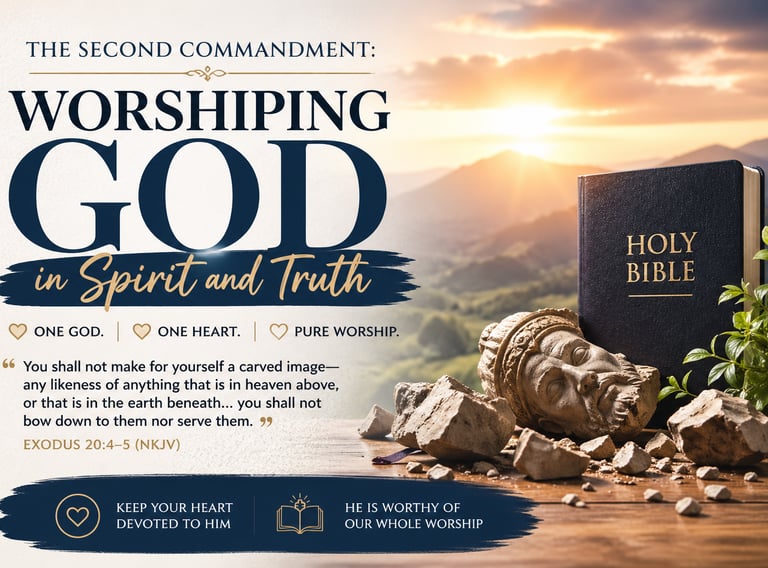
The Second Commandment: Worshiping God in Spirit and Truth
The Second Commandment invites us into a deeper, more meaningful relationship with God—one that is rooted in pure worship and undivided devotion. It is written in Exodus 20:4–5 (NKJV):
“You shall not make for yourself a carved image—any likeness of anything that is in heaven above, or that is in the earth beneath… you shall not bow down to them nor serve them.”
At its core, this commandment is not just about avoiding physical idols. It is about protecting the purity of our worship and ensuring that our hearts remain fully devoted to the one true God.
Understanding the Heart Behind the Command
From the very beginning, God made it clear that He cannot and should not be reduced to something formed by human hands or imagination. In Deuteronomy 4:15–16, we are warned:
“Take careful heed to yourselves… lest you act corruptly and make for yourselves a carved image.”
This reminds us that when we attempt to define God on our own terms, we risk distorting His holiness, power, and truth.
God desires to be known as He truly is—not as we might shape Him to be.
Idolatry Beyond Images
While carved images may seem like a distant issue today, idolatry is still very real. It often takes on more subtle forms. Anything that captures our heart more than God—our possessions, ambitions, relationships, or even ourselves—can become an idol.
The Apostle Paul makes this clear in Colossians 3:5:
“…covetousness, which is idolatry.”
And the Apostle John gives a direct and timeless warning in 1 John 5:21:
“Little children, keep yourselves from idols.”
Idolatry is not just about what we see—it’s about what we value most.
True Worship Defined by Christ
Jesus brings clarity and depth to this commandment when He speaks about true worship. In John 4:23–24, He teaches:
“The true worshipers will worship the Father in spirit and truth; for the Father is seeking such to worship Him. God is Spirit, and those who worship Him must worship in spirit and truth.”
This shifts our focus away from outward forms and toward inward sincerity. God is not looking for ritual alone—He is seeking hearts that are fully aligned with Him.
Living as God’s Temple
The New Testament reveals something powerful about our identity as believers. In 2 Corinthians 6:16, Paul writes:
“What agreement has the temple of God with idols? For you are the temple of the living God.”
This means our lives are meant to reflect His presence. We are called to carry His truth, His character, and His holiness in everything we do.
A Call to Examine Our Hearts
The Second Commandment ultimately calls us to look inward. What holds our attention? What drives our decisions? What do we prioritize above all else?
Anything that takes God’s rightful place in our lives becomes an obstacle to true worship.
But there is good news—when we turn away from idols and fix our hearts on Him, we step into the kind of relationship God desires to have with us.
Final Reflection
The Second Commandment is not just a restriction—it is an invitation.
An invitation to know God as He truly is.
An invitation to worship Him without distortion.
An invitation to live with a heart fully devoted to Him.
As we walk in obedience, we discover that true worship is not found in images or objects—but in a life surrendered to the living God.
Personal Reflection
What do I turn to first in times of stress—God or something else?
Do my daily habits reflect a life centered on God or distractions?
Is there anything I rely on more than I rely on God?
Bloodfallen's CB Corner
Bloodfallenscbcorner@gmail.com
© 2025. All rights reserved.


John 3:16 NKJV "For God so loved the world that He gave His only begotten Son, that whoever believes in Him should not perish but have everlasting life".
601-402-4128
Hattiesburg, MS 39402