
The Sixth Commandment: Guarding the Heart and Valuing Life
The Sixth Commandment teaches more than avoiding physical harm—it reveals God’s desire for hearts free from hatred, anger, and unforgiveness. This blog explores how both the Old and New Testament (NKJV) call believers to pursue peace, mercy, reconciliation, and a Christ-centered love for others through honest spiritual self-examination.
STUDYING THE TEN COMMANDMENTS
Jennifer Sumrall
5/8/20262 min read
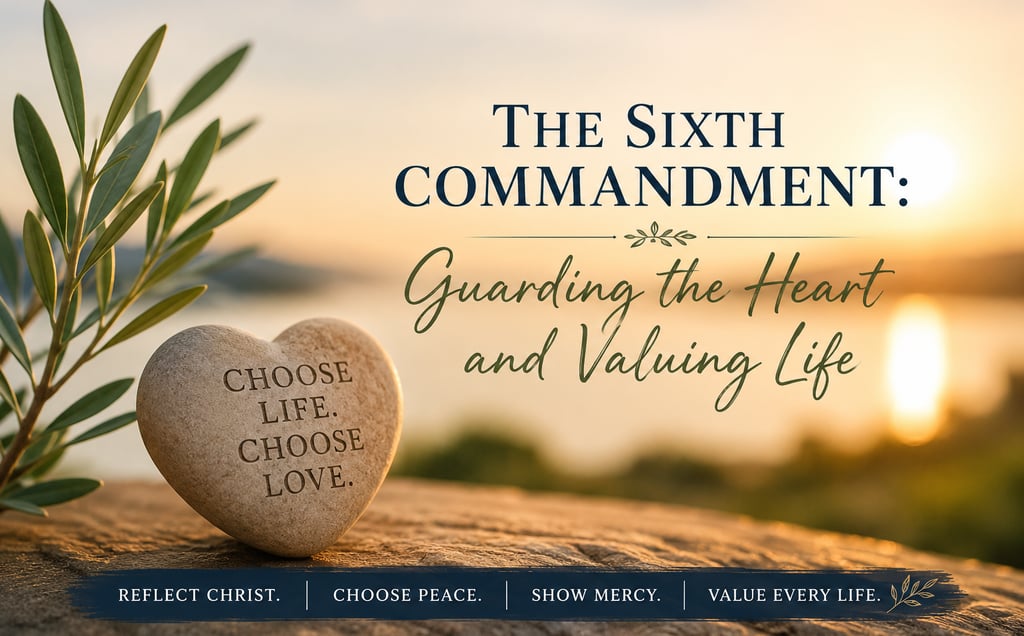

The Sixth Commandment: Choosing Life, Mercy, and the Condition of the Heart
The Sixth Commandment is simple in wording, yet deeply powerful in meaning:
“You shall not murder.” — Exodus 20:13 (NKJV)
This commandment reminds us that human life is sacred because every person is created by God. In the Old Testament, God established laws to protect life, condemn violence, and call His people to justice and mercy. Murder was not only seen as a crime against another person, but also as a sin against the Creator who gave life.
The commandment goes beyond physical violence. Throughout Scripture, God continually examines the condition of the heart. Hatred, bitterness, revenge, and uncontrolled anger can grow into spiritual destruction long before physical harm ever occurs.
King David wrote:
“Depart from evil and do good;
Seek peace and pursue it.” — Psalm 34:14 (NKJV)
This raises an important spiritual question:
Do I pursue peace, or do I hold onto anger and resentment?
Have I allowed unforgiveness to take root in my heart?
Am I speaking words that heal others, or words that tear them down?
In the New Testament, Jesus expanded the meaning of the Sixth Commandment during the Sermon on the Mount. He taught that the sin begins in the heart before it appears in actions.
Jesus said:
“You have heard that it was said to those of old, ‘You shall not murder,’ and whoever murders will be in danger of the judgment. But I say to you that whoever is angry with his brother without a cause shall be in danger of the judgment.” — Matthew 5:21–22 (NKJV)
Christ revealed that anger, hatred, insults, and contempt are serious spiritual matters before God. The Sixth Commandment is not only about avoiding murder; it is about learning to love others, forgive quickly, and reflect the mercy of Christ.
The apostle John later wrote:
“Whoever hates his brother is a murderer, and you know that no murderer has eternal life abiding in him.” — 1 John 3:15 (NKJV)
These verses invite believers into honest self-examination:
Is there someone I refuse to forgive?
Have I been harboring bitterness, jealousy, or rage?
Do my words bring life or emotional harm to others?
Am I praying for reconciliation and peace in my relationships?
Have I treated others as people loved by God?
The Sixth Commandment ultimately points us toward the heart of Christ. Jesus came not only to save us from outward sin, but also to transform our inward hearts. Through the Holy Spirit, believers are called to become peacemakers, showing compassion, patience, forgiveness, and love in a world often filled with anger and violence.
Paul encouraged believers with these words:
“Be kind to one another, tenderhearted, forgiving one another, even as God in Christ forgave you.” — Ephesians 4:32 (NKJV)
Living out the Sixth Commandment means valuing life, rejecting hatred, seeking reconciliation, and allowing God to shape our hearts into reflections of His love and peace.
Bloodfallen's CB Corner
Bloodfallenscbcorner@gmail.com
© 2025. All rights reserved.


John 3:16 NKJV "For God so loved the world that He gave His only begotten Son, that whoever believes in Him should not perish but have everlasting life".
601-402-4128
Hattiesburg, MS 39402